


What Is the Difference Between a Turkish Knot and a Persian Knot?
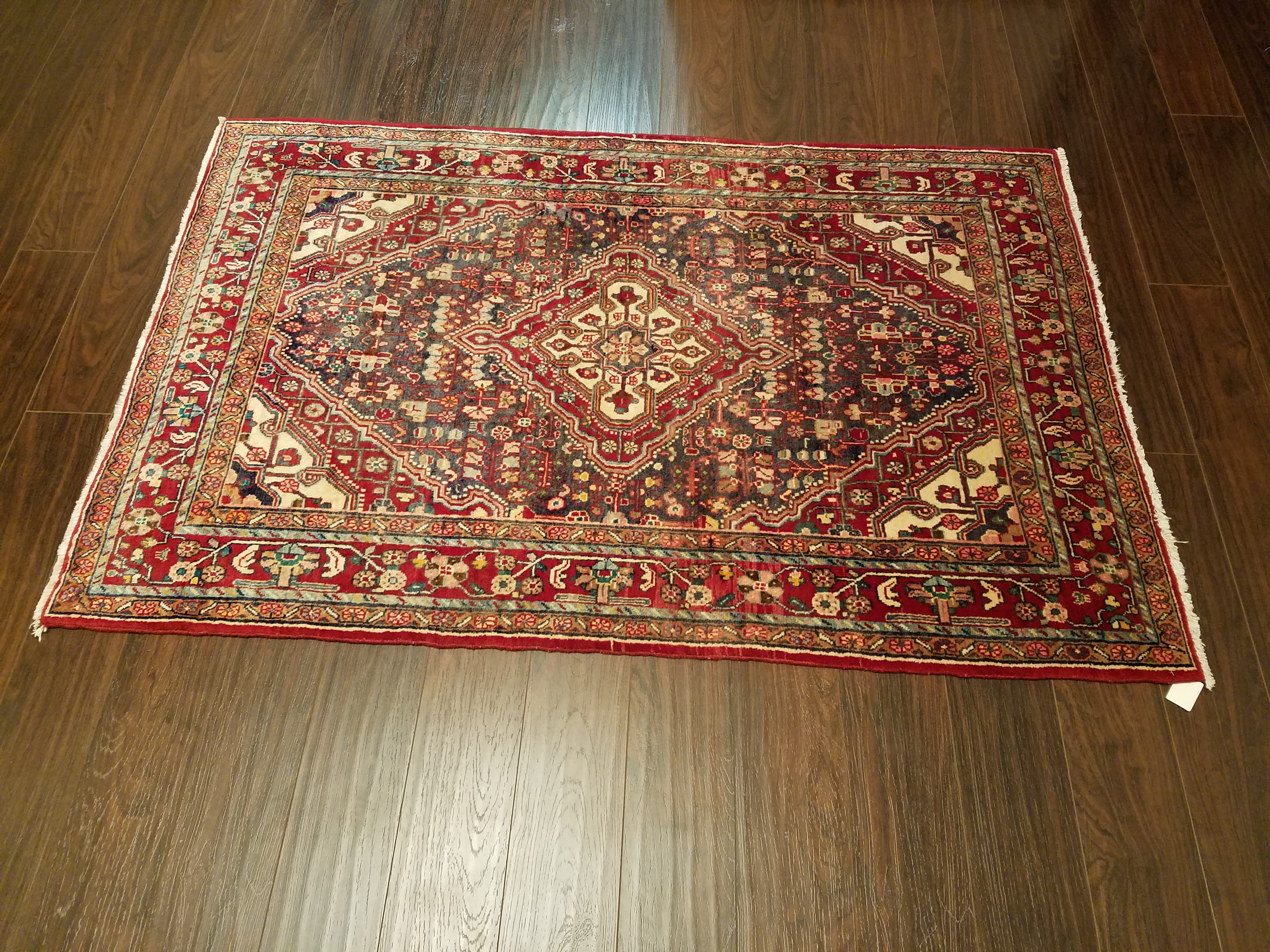
Getting Down to the Foundation

When shopping for a hand-knotted rug, one highly important detail, which you may never consider is the type of knot used in its construction.
Why would you? It doesn't define your rug's quality, doesn't directly affect your rug's value or price and won't directly impact the way your rug looks or feels under your feet.
So why should anyone care?
A couple of reasons why these details may intrigue our readers. For instance, knot types can be indicators in identifying a rug's origin. Some countries strictly use one knot why other countries may use the other, or both. Knot types can vastly affect the number of knots that can be woven within a square inch or meter of a rug, making highly intricate designs more doable. Some may argue that the knot type impacts the durability and longevity of a rug, however, I personally believe the structure of the foundation is of higher importance.
What is a Persian Knot and Turkish Knot?
The two most common knotting methods in traditional rug weaving are the Turkish knot and the Persian knot. While both are used to create beautiful, durable carpets, they differ in structure, appearance, and the types of designs they best support.
Understanding these differences helps buyers better appreciate craftsmanship, and regional weaving traditions.
The Turkish Knot (Ghiordes Knot or Symmetrical Knot)

The Turkish knot, also known as the Ghiordes knot, is a symmetrical knot. In this method, the yarn is wrapped evenly around two adjacent warp threads, with both ends emerging between the same two warps as seen in this photo.
Because the knot is tied symmetrically, it creates a very secure and tightly anchored structure.
Turkish knots are traditionally used in rugs woven in Turkey (Anatolia), the Caucasus, parts of the Balkans, some Turkoman tribal rugs and some Kurdish rug in Iran.
Rugs made with Turkish knots often feature bold geometric patterns, strong outlines, and clearly defined motifs. The symmetry of the knot naturally lends itself to angular (rectilinear) designs rather than intricate curves.
Why Do We See the Turkish Knot in Persia?
The Turkish knot entered Iran through migrating Turkic tribes who were gradually forced or resettled into the region over centuries. These communities carried their weaving traditions with them, preserving the symmetrical knot technique, which continues to appear in parts of Iran today through tribal and village rug production.
The Persian Knot (Senneh Knot or Asymmetrical Knot)

The Persian knot, also known as the Senneh knot, is an asymmetrical knot. In this technique, the yarn wraps fully around one warp thread and passes loosely around the adjacent warp before emerging as seen in the photo.
This asymmetry allows the weaver greater control over knot placement, making it possible to tie knots more closely together. As a result, Persian knots are ideal for creating fine details, curving lines, and elaborate floral patterns that are curvilinear.
Persian knots are commonly found in rugs woven in parts of Iran, India, Pakistan and China (in Persian-influenced designs).
Because the knot can be packed more densely, Persian-knotted rugs often achieve higher knot counts per square inch (KPSI). This allows for highly detailed medallions, scrolling vines, pictorial scenes, and refined artistic compositions.
Not Always as It Sounds
While these knots have many names, some are misleading as to where you can find their use. You'd expect the Persian (Senneh) knot to be used in the capital city of Sanandaj, or Senneh, in Iran, however the Turkish knot, also known as Ghiordes is most commonly used as well as many villages in the Northern Iran, Hamadan Province region.
Which Knot Is Better?
Neither knot is inherently “better” than the other. Instead, each serves a different purpose. Turkish knots emphasize strength, structure, and bold design while the Persian knots emphasize detail, elegance, and artistic complexity.
A high-quality rug can be made with either knot. Factors such as wool quality, dye materials, weaving skill, foundation materials, and finishing techniques often matter more than the knot type alone.
A hand-knotted rug begins with a strong foundation of vertical warp threads stretched tightly on a loom. Horizontal weft threads are woven between rows of knots to lock them in place. Together, the warps and wefts form the rug’s structure, holding each knot securely while giving the carpet its strength, flexibility, and longevity.
The Unspeakable Jufti Knot
Jufti knots are a weaving shortcut sometimes found in hand-knotted rugs, especially in lower-quality workshops and village pieces that lack the care of personal expression. Instead of tying each knot around two individual warp threads, the weaver loops one knot, either Persian or Turkish around four warps or more at once, allowing the rug to be made faster and at lower expense.
In a standard Persian (Senneh) knot, each knot wraps around two warps. With jufti weaving, one knot spans four warps or more, reducing the number of knots per square inch by nearly half—even if the rug appears finely woven at first glance. Jufti knots were often used to speed up production and reduce labor costs. Unfortunately, if you're taking shortcuts on production, what else are you cutting corners on? What are the chances that an inferior dye and wool quality are also being utilized? This is a knot that no one is proud of, and nobody would advertise. If you suspect a rug was made using a Jufti knot, I'd steer clear of that train wreck.
One sign of a Jufti knot being used is a thin, not dense pile where the thickness of the wool strand must be spread out to cover twice the area. Sometimes Jufti knots are used in the field of a rug that is all one color to speed up production, however I would never recommend purchasing a rug that features these characteristics.
Collectors generally view jufti weaving as inferior to fully knotted construction, though some antique or regional rugs with jufti knots still hold decorative or historical value.
Why Foundation Matters
The foundation of a rug is of greater importance than any knot that exists. Without a solid foundation to support the rug, the knots will simply float away. The most common foundation in hand-knotted rugs would be the double-wefted structure, which may utilize two or more wefts, both before and after a row of knots.
In a few locations in Turkey (Anatolia) and Iran (Persia), the single-wefted structure is used. This structure is very noticeable to even an untrained eye.
A single-wefted structure will typically stand out as showing a checkered pattern in the back of the rug. This checkered pattern is created by the void of the weft, as it goes under every other warp.


Why Knot Type Continues to Not Matter to Buyers
Understanding the difference between Turkish and Persian knots helps explain why handmade rugs can vary in appearance by design. However, most buyers aren't looking to verify the details or their recent rug purchase. Buyers typically don't care how the handle of the rug feels in their grip. For most buyers, knot type is not a deciding factor when purchasing a rug. What matters more is how the rug looks in their home, how it feels underfoot, and how well it suits their lifestyle.
That said, knot type can be interesting to some buyers and especially useful to others.
For collectors, dealers, and experienced enthusiasts, identifying the knot structure can provide valuable clues about where a rug may have been made and whether it is authentic or not. This becomes particularly helpful when evaluating older rugs or pieces from regions with overlapping designs, where origin is not always immediately clear.
Whether a rug features the strength and symmetry of a Turkish knot or the refined detail of a Persian knot, both techniques represent exceptional hand craftsmanship and remains a fundamental detail to the identity of authentic handmade rugs today.


Comments