


What Is the Future of Persian Rugs?
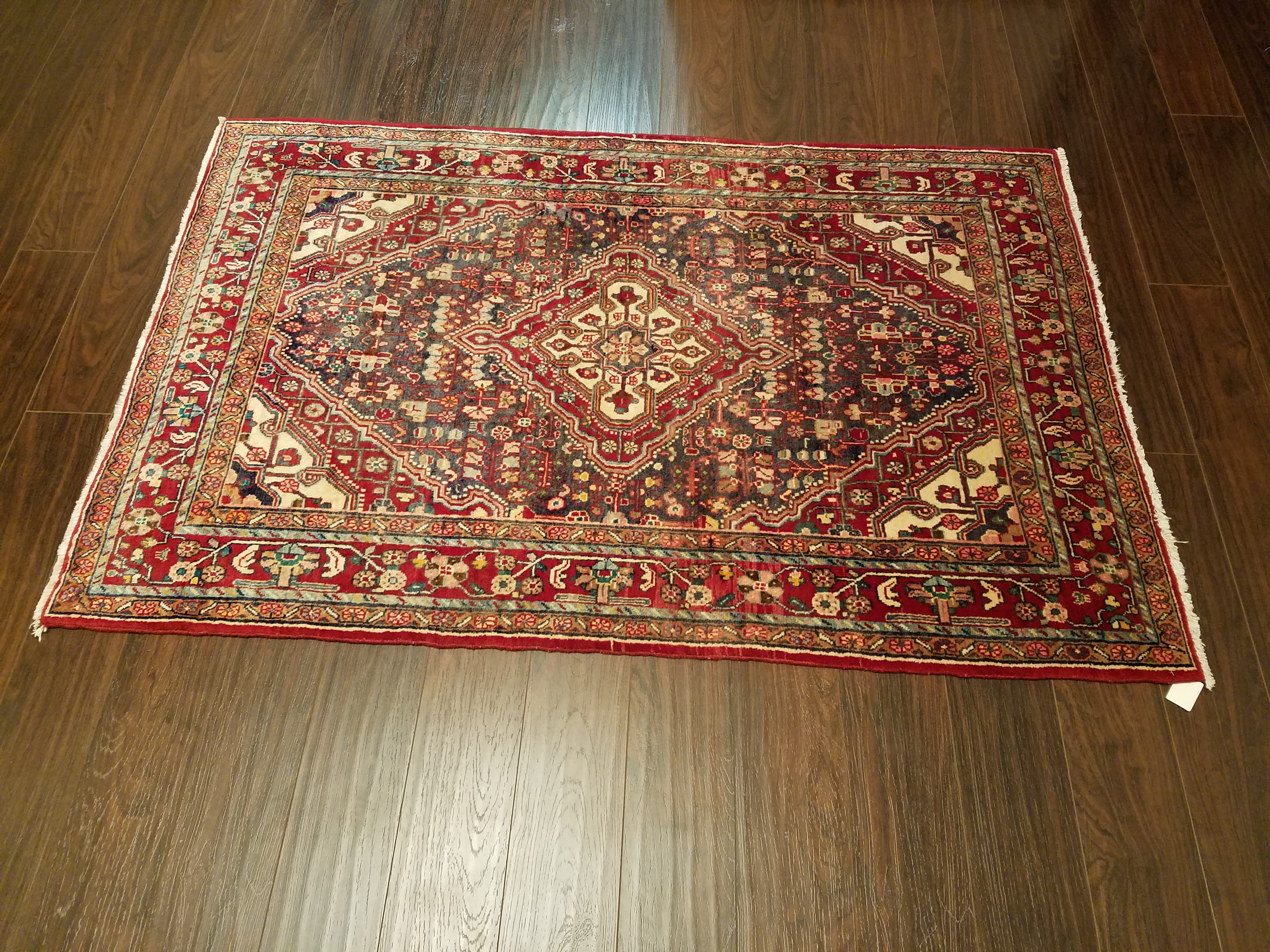

For centuries, Persian rugs have represented far more than decorative floor coverings. They are cultural documents—woven records of village life, tribal identity, artistic lineage, and economic survival. Today, however, the future of Persian rugs stands at a crossroads shaped not only by global consumer trends, but by profound political, economic, and social changes unfolding inside Iran itself.
Currency collapse, long-standing U.S. sanctions, mass protests, and the growing possibility of regime change involving Ali Khamenei and the Islamic Revolutionary Guard all raise urgent questions. If Iran were to open economically to the world again, what would that mean for Persian rugs? Would markets flood with inventory? Would prices crash—or skyrocket? Would handmade weaving traditions survive competition from machine-made lookalikes?
This article explores where Persian rugs may be headed, and why the answer is more complex—and more hopeful—than many expect.
Persian Rugs as a Cultural and Economic Anchor
Persian rugs have historically functioned as both art and livelihood. In rural Iran, weaving has long been a household industry. Families wove rugs not only for trade, but for dowries, religious spaces, and daily use. Skills were passed down orally and visually—from grandmother to mother to daughter, from uncle to nephew—without formal institutions.
For much of the 20th century, Persian rugs formed a cornerstone of Iran’s non-oil exports. They brought hard currency into the country, supported millions of artisans, and anchored regional economies in cities and villages alike. The global reputation of Persian rugs was built on hand-spun wool, natural dyes, dense knotting, and regional design language—qualities that no other rug-producing nation could fully replicate.
Yet the system that sustained this craft has been under immense strain for decades.
The Devaluation of Iran’s Currency and Its Effects on Weaving
One of the most immediate pressures on the rug industry is the dramatic devaluation of Iran’s currency. As the rial has lost value, everyday life has become more expensive for Iranian families. Wool, cotton, dyes, and food staples now cost more in real terms, even when sourced domestically.
For weavers, this creates a painful paradox. While a weaker currency theoretically makes exports more competitive abroad, it also means that the income earned from weaving often fails to keep pace with inflation at home. Many skilled artisans have been forced to abandon weaving altogether in favor of construction work, factory jobs, or informal labor that provides quicker cash flow.
This has led to a shrinking base of full-time professional weavers—especially in urban workshops—while part-time or lower-skilled production increases. The result is a gradual thinning of expertise at the highest levels of craftsmanship.
Protests, Unrest, and the Fragility of Production
In recent years, protests across Iran have evolved from economic demonstrations into broader political unrest. In some cases, these protests have escalated into riots, disrupting transportation networks, marketplaces, and regional supply chains.
For the rug industry, instability has immediate consequences:
Wool shipments are delayed or interrupted
Export logistics become unreliable
Foreign buyers hesitate to place large orders
Insurance and shipping costs increase
Small village producers, who rely on consistent merchant relationships, are often hit hardest. When orders stop coming, looms sit idle—and idle looms rarely return to production easily.
At the same time, unrest has sparked renewed conversations among Iranians about national identity, heritage, and self-determination. For some, traditional crafts like rug weaving have taken on symbolic importance as cultural assets worth preserving, not abandoning.
What If the Islamic Revolutionary Guard Were Overthrown?
The most consequential “what if” facing the Persian rug industry is political transformation. If the Islamic Revolutionary Guard were dismantled or significantly weakened, and Iran moved toward a more open, civilian-led system, the ripple effects would be enormous.
Potential Impacts on the Iranian People
A shift away from military and ideological control could lead to:
Greater economic freedom for private artisans and exporters
Reduced corruption in trade channels
Reconnection with international banking systems
Increased foreign investment in cultural industries
For weavers, this could mean fairer pricing, direct access to buyers, and the return of long-dormant workshops.
The Possibility of Open Trade
Perhaps the most dramatic change would be the reopening of open trade in Persian rugs. Sanctions have forced Iranian rugs out of major markets like the United States for years. If those barriers fell, Persian rugs would once again be legally and openly traded on a large scale.
This raises an obvious question: would markets flood with rugs?
Would the Market Flood with Persian Rugs?
At first glance, it seems likely. Decades of restricted exports have created pent-up inventory. Warehouses, private collections, and dormant merchant stockpiles could suddenly re-enter global markets.
However, a true “flood” may be short-lived.
Many older rugs have already been sold through indirect routes or absorbed into private collections. Meanwhile, the number of active high-level weavers today is far smaller than it was in the 1970s or 1980s. Iran simply does not have the labor capacity to instantly produce massive volumes of museum-quality hand-knotted rugs.
Instead, the market would likely experience:
A short-term increase in availability
A surge of interest from collectors and dealers
Selective price volatility by region and quality
Will Persian Rug Prices Go Down—or Up?
The answer is both, depending on the segment.
Entry-Level and Commercial Rugs
Lower-quality or commercial-grade Persian rugs could see temporary price softening due to increased supply and competition. Buyers who have not had access to Iranian rugs for years may suddenly have options, putting pressure on mid-tier pricing.
High-Quality, Authentic Hand-Knotted Rugs
At the top end, prices are far more likely to rise.
True village rugs, tribal weavings, and older pieces made with natural dyes and hand-spun wool are finite. Once collectors and institutions re-enter the market, demand for these pieces could outstrip supply quickly. Increased transparency and provenance would further elevate value.
In other words, the reopening of Iran may clarify—not cheapen—the distinction between ordinary rugs and exceptional ones.
How Would This Affect Oriental Rugs from Other Countries?
If Persian rugs re-enter global markets openly, it will undoubtedly impact Oriental rugs produced in countries like India, Pakistan, Afghanistan, and Turkey.
Increased competition could force some price corrections, particularly for rugs that have been marketed as “Persian-style” substitutes during Iran’s absence. Consumers would once again be able to compare originals against interpretations.
However, this would not spell disaster for non-Iranian producers. Instead, it may push the industry toward greater honesty and specialization:
Indian workshops may emphasize customization and scalability
Afghan weavers may highlight tribal authenticity
Turkish producers may lean into regional design heritage
Healthy competition often improves quality across the board.
The Rise of High-Quality Machine-Made Persian Rugs
One of the most disruptive trends in recent years is Iran’s own production of high-quality, machine-made rugs. These pieces can be astonishingly convincing to the untrained eye, mimicking knot density, color variation, and classic designs.
For mass markets, this raises concerns. If consumers cannot easily tell the difference, will hand-knotted rugs become obsolete?
History suggests otherwise.
Machine-made rugs excel at consistency and affordability, but they lack the subtle irregularities, structural longevity, and material depth of hand-knotted pieces. Over time, informed buyers tend to gravitate toward authenticity—especially as education improves and transparency increases.
Rather than destroying hand-knotted weaving, machine production may push it further into the realm of true luxury and collectible art.

Have Younger Generations Learned the Craft?
Perhaps the most emotionally charged question is whether younger Iranians are learning the skills needed to carry weaving into the future.
The answer varies by region.
In some areas, weaving knowledge has been lost or diluted as younger generations pursue education, technology, or emigration. In others, particularly in rural villages, weaving remains one of the few viable economic paths—and traditions persist.
Encouragingly, there has been renewed interest among some young Iranians in cultural preservation, design innovation, and ethical craft. Social media, direct-to-consumer platforms, and international collaborations have shown that weaving does not have to be a dead-end profession.
If Iran opens politically and economically, these younger artisans may finally see a future where craftsmanship is both respected and rewarded.
The Likely Future of Persian Rugs

The future of Persian rugs will not be defined by a single event, but by convergence:
Political transformation
Economic normalization
Global re-engagement
Consumer education
If Iran remains isolated, the craft will survive—but in narrower, more fragile forms. If Iran opens, Persian rugs may experience a renaissance: not as mass commodities, but as cultural artifacts once again valued for their depth, history, and human touch.
Rather than destroying the industry, change may ultimately restore it to what it has always been at its best—a living art form shaped by hands, heritage, and resilience.
Final Thoughts
Persian rugs have survived empires, invasions, industrial revolutions, and modern geopolitics. Their future, while uncertain, is far from bleak. Whether prices rise or fall, markets expand or contract, the essence of Persian weaving—its soul—remains rooted in people, not politics.
And as long as there are hands willing to tie knots and stories worth telling in wool, Persian rugs will endure.


Comments