


Confessions of a Rug Dealer: How Oriental Rug Shops Really Make Their Money
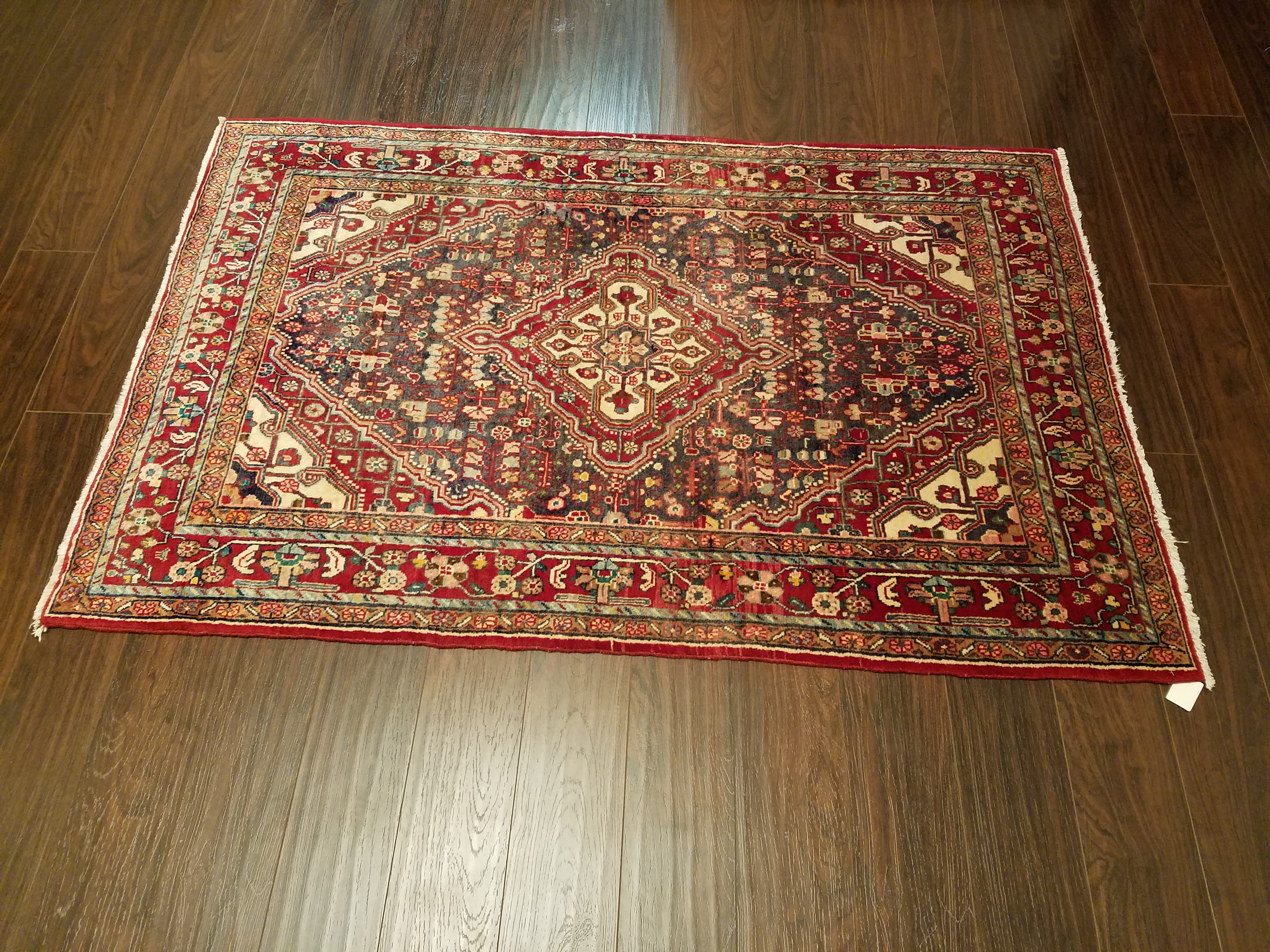
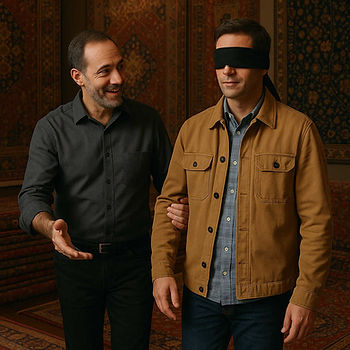
Let’s be honest: the rug world is beautiful, mysterious, and — at times — a little bit theatrical.
If you’ve ever wandered into a Persian rug shop, you’ve probably felt that intoxicating mix of beauty, tradition, and salesmanship. A dealer greets you warmly, unrolls one masterpiece after another, and before you know it, you’re sitting on a stack of carpets sipping tea, caught somewhere between fascination and confusion.
As professionals in this industry, we at ShopPersianRugs.com have seen it all — the good, the bad, and the brilliant. We love this craft, but we also know the tricks that some dealers use to squeeze every last penny out of a sale.
So, here it is. The truth. These are our confessions — an insider’s look at how rug shops really make their money, and how you can protect yourself while still enjoying the magic of buying a hand-knotted rug.
The Storytelling Spell
Every great rug comes with a story — and rug dealers know it.
The art of storytelling is central to every sale. You’ll hear tales about nomadic tribes, ancient patterns, and wool washed in mountain streams. Many of those stories are true; others have been polished with a bit of creative license.
It’s not unusual for a rug from India or Pakistan to be presented as “Persian style” — or for a newly woven carpet to be described as “semi-antique.” Dealers understand that customers aren’t just buying a rug; they’re buying romance, history, and emotion. Be cautious of wording and what it may be implying, especially as it is related to condition. Words like vintage can be misleading, leaving you thinking you're getting the best from an older era, however if you see "vintage condition", you should be expecting it to be heavily worn. Dealers are often looking to tiptoe around the not so desirable features of a previously owned carpet.

How it works:
The more exotic and authentic the story sounds, the easier it is to justify a higher price. People don’t fall in love with numbers — they fall in love with narratives.
How to shop smarter:
Ask questions that require specific answers:
Which village was this rug woven in?
What kind of knot does it use — Persian or Turkish?
Is the wool hand-spun or machine-spun?
A real dealer will light up with details. A storyteller will dance around them.
The Discount Illusion
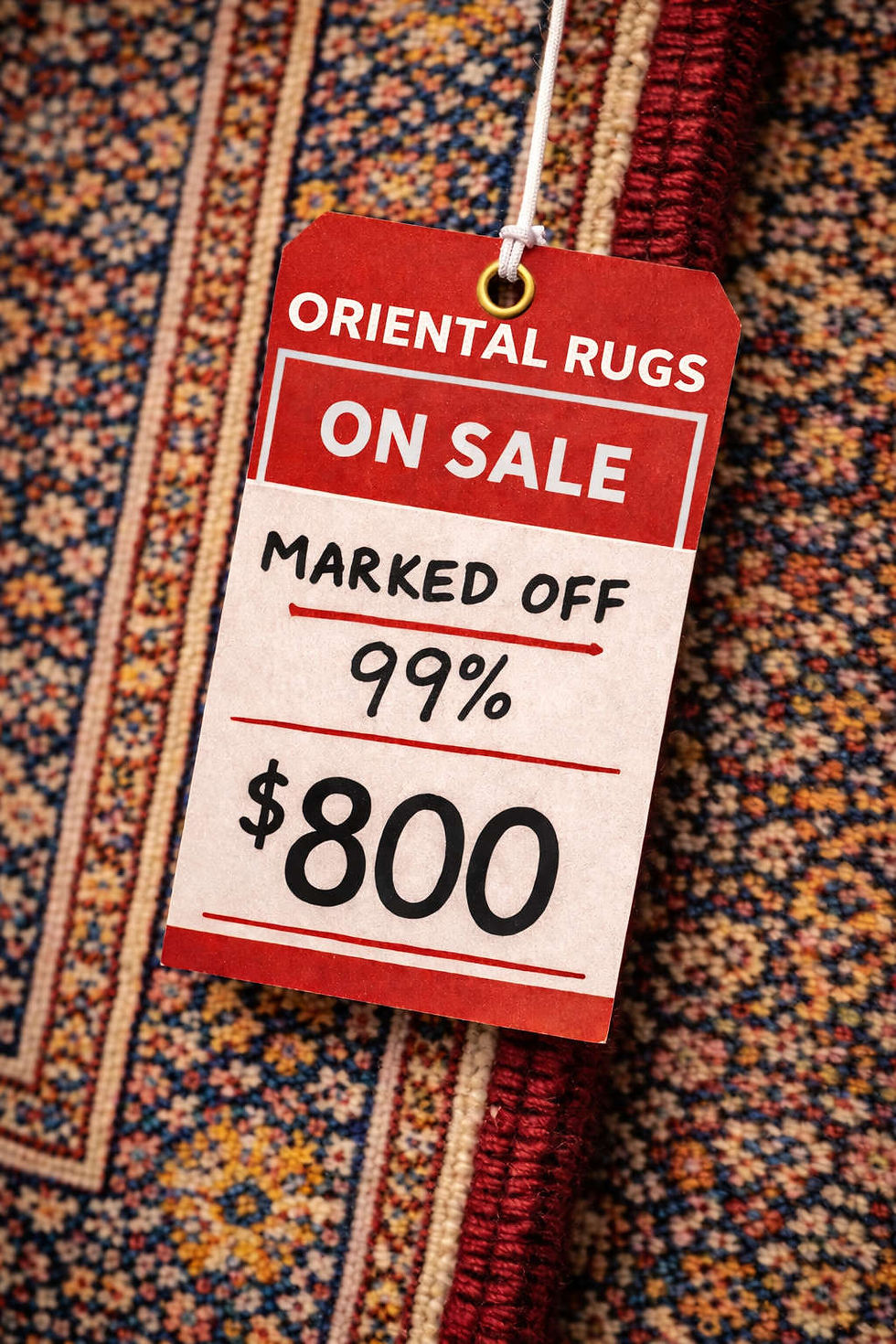
Walk into any rug store and you’ll see signs like “70% Off!” or “Liquidation Sale!”
Spoiler: the “original price” often never existed.
This is called anchor pricing — setting an artificial high price first so the “discount” feels irresistible later. A rug marked “$9,000, now $3,995” might have been meant to sell for $4,000 all along.
It’s a psychological trick used everywhere from furniture showrooms to jewelry counters. The idea is to make you feel like you’re getting a once-in-a-lifetime bargain.
How to shop smarter:
Compare prices online. If you find similar rugs (same size, origin, and material) for half the “retail” price, you’ll know the markdown is mostly theater.
The Add-On Goldmine
Here’s a secret few customers realize: most rug stores don’t just make money from the rug itself. They make it on the extras.
Rug Pads
A rug pad that costs a store $30 wholesale can easily sell for $150. Dealers love them because they’re low effort and high profit — and they sound like a responsible purchase.
Cleaning and Repair
Many stores offer “in-house” cleaning and restoration, but often subcontract the work to specialists, adding a hefty commission on top. The customer pays more without realizing the markup.
Delivery & Installation
The phrase “white-glove delivery” sounds luxurious — but sometimes, it’s just two guys in a van. Always ask what’s included before agreeing to extra fees.
How to shop smarter:
Add-ons aren’t bad if they’re transparent. Just make sure you know what you’re paying for and who’s performing the service.
The Mirage of “Handmade”
In the world of rugs, “handmade” doesn’t always mean hand-knotted.
This confusion is one of the biggest money-makers in the industry. There are three main categories:
Hand-knotted (true craftsmanship — every knot tied individually)
Hand-tufted (made with a tufting gun and glue backing — faster, cheaper)
Hand-loomed or power-loomed (partially machine-assisted)
Unscrupulous sellers will blur those lines, using “handmade” for any rug that involves a human hand, even briefly. The result? A $300 tufted rug sold for $1,500 as “handcrafted.”
The “Appraisal” Trick

You’ve probably seen it: a glossy certificate claiming your new rug is worth twice what you paid. It feels good to see those big numbers — until you realize that many of those “appraisals” are created in-house by the same shop that sold the rug.
The goal isn’t fraud; it’s psychology. Seeing a “$12,000 value” next to your $6,000 purchase reinforces the illusion of a deal — even if the valuation is entirely arbitrary.
A professional appraisal can be handy in the situation where you lose a valuable carpet to a natural disaster, but should the appraisal be trusted, is it ethical? Just a thought.
How to shop smarter:
If you want a true appraisal, use an independent professional — ideally someone certified through a recognized organization. Real appraisers have no reason to inflate value.
The Home Trial Trap
Some rug shops offer to let you “try the rug at home.” It sounds friendly and risk-free — and in many ways, it is. But here’s the secret: once a rug is in your home, you’re emotionally hooked.
When you see how it transforms your room, you form an attachment. That’s human nature — and dealers know it. Even if it’s slightly outside your budget, you’re more likely to keep it once you’ve lived with it.
How to shop smarter:
Set a firm budget before accepting a home trial. Appreciate the rug but let your head — not your heart — make the final call.

The “Estate Sale” Illusion
Walk into a rug shop and you might see signs like:
“Estate Collection!” “Consignment Sale!” “Collector’s Liquidation!”
These phrases create a sense of rarity and urgency. You picture a family parting with heirlooms, or a collector releasing treasures. In reality, many of these “estate” rugs come from normal wholesale shipments.
Similarly, trade-in programs let stores buy used rugs for pennies and resell them for large margins — all while appearing generous.
How to shop smarter:
If a rug is truly on consignment, ask for provenance details or documentation. If it’s part of an “estate sale,” the dealer should be able to tell you where it came from — not just a vague story.


The Psychology of Presentation
The rug business isn’t just about selling art; it’s about selling atmosphere.
From lighting to layout, every element in a rug showroom is designed to enhance value perception. Warm spotlights make colors glow, soft music sets a mood, and carefully arranged stacks make you feel like you’re discovering treasures.
Even the order of presentation is intentional. A dealer might show you a $20,000 silk rug first — not to sell it, but to make the $5,000 rug that follows feel like a bargain.
How to shop smarter:
Appreciate the beauty but keep perspective. The lighting, music, and language are tools — not indicators of authenticity.
The Tag Code Secret
Here’s one of the industry’s oldest tricks: coded price tags.
Instead of writing prices in plain numbers, some shops use letters or symbols to hide the true “bottom line.” For instance, a tag might read GHTC — where each letter represents a number from a secret code known only to staff.
This system allows salespeople to look generous when they “negotiate down” — even though you’re still paying full intended price.
How to shop smarter:
If the tag looks coded or handwritten, ask directly how prices are determined. Honest dealers will tell you exactly what you’re looking at.
The Shadier Side of the Market
Most rug dealers are passionate, hard-working professionals. But like any industry, there are a few who cut corners.
Common examples include:
Selling Indian or Turkish rugs as “Persian.”
Calling 10-year-old rugs “antique.”
Advertising viscose or mercerized cotton as “pure silk.”
Artificially aging rugs with chemical washes or tea stains.
Exaggerating knot counts to make rugs seem finer than they are.
These practices hurt everyone — the customer, the artisan, and the honest dealer.
At ShopPersianRugs.com, we stand firmly against this behavior. We believe every rug deserves honesty: its true origin, age, materials, and story.
What Ethical Dealers Do Differently
The best dealers don’t hide behind mystery. They educate.
They show you the back of the rug. They explain the knot type. They talk about the weavers by name. They take pride in sharing knowledge — because they know that informed buyers become lifelong customers.
Transparency is the foundation of trust. That’s why at ShopPersianRugs.com, every rug we sell comes with full disclosure — from fiber content and knot density to regional style and cultural background.
When you understand what you’re buying, you see value, not manipulation.
How to Protect Yourself — and Still Enjoy the Experience
Buying a handmade rug should never feel like a battle. It should feel like discovery. Here’s how to protect yourself without losing the magic:
Learn the basics — understand terms like hand-knotted, hand-tufted, KPSI, and natural dyes.
Ask questions — a real dealer loves sharing details.
Inspect the back — true craftsmanship reveals itself there.
Research prices — compare across reputable online sources.
Avoid urgency traps — rugs last forever; the “deal” can wait.
Follow your instincts — if the story feels exaggerated, it probably is.
The Honest Truth Beneath the Weave
Every rug carries a story — from the shepherd tending sheep in the mountains to the weaver knotting wool in rhythm with tradition. But when that story reaches the showroom floor, it sometimes gets wrapped in marketing magic.
Our mission at ShopPersianRugs.com is simple: unwrap the truth.
We want buyers to feel the same wonder and appreciation that we do — without falling prey to inflated markups or misleading claims. The beauty of this industry lies not in its salesmanship, but in its sincerity.
So, next time you step into a rug store or browse online, remember: every knot has a purpose, every pattern a history — and every honest dealer a responsibility to keep that tradition alive with integrity.
Because when the stories are told truthfully, everyone wins — the customer, the artisan, and the art itself.


Comments