


About Karaja Rugs
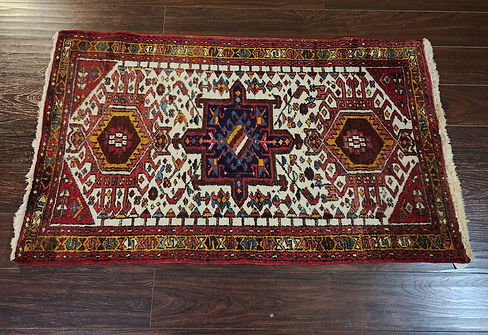
Karaja (Gharajeh)
Karaja rugs are among the most recognizable village weavings of northwestern Iran, prized for their durability, bold geometric designs, and timeless appeal. Woven in and around the village of Karaja, located between the cities of Tabriz and Heriz, these rugs reflect centuries of Persian weaving tradition while maintaining a distinct identity of their own. Today, antique Karaja rugs remain highly sought after by collectors and homeowners alike for their combination of beauty, craftsmanship, and practicality.
At first glance, Karaja rugs share many visual similarities with neighboring Heriz rugs. Both often feature large geometric medallions, angular floral motifs, and vibrant color palettes dominated by rich reds, deep blues, ivory, and accents of green or camel. These bold designs make Karaja rugs particularly well suited for both traditional and contemporary interiors, where their striking patterns create a dramatic focal point.
While the designs may resemble those of Heriz rugs, the weaving structure of Karaja rugs is more closely related to rugs produced in the Hamadan region. Rather than the heavier, more rigid construction commonly associated with Heriz rugs, Karaja rugs are typically woven using a single-weft structure characteristic of many Hamadan-area village rugs. This construction produces a rug that is slightly more flexible while still offering exceptional durability for everyday use.
Karaja weavers often incorporate highly stylized botanical motifs, geometric vines, and distinctive medallions that reflect the artistic traditions of rural Azerbaijan. Because these rugs were woven in small village workshops and family homes rather than large city ateliers, each piece possesses subtle variations that add to its individuality and charm.
Whether displayed in a living room, dining room, or entryway, a genuine Karaja rug offers the perfect balance of artistic character and lasting performance. Its combination of Heriz-inspired design and Hamadan-style construction makes it a unique and desirable example of authentic Persian village weaving that continues to be admired by collectors around the world.